Hon'ble Prime Minister Shri Narendra Modi Leads Nationwide International Day of Yoga Celebrations from Kolkata
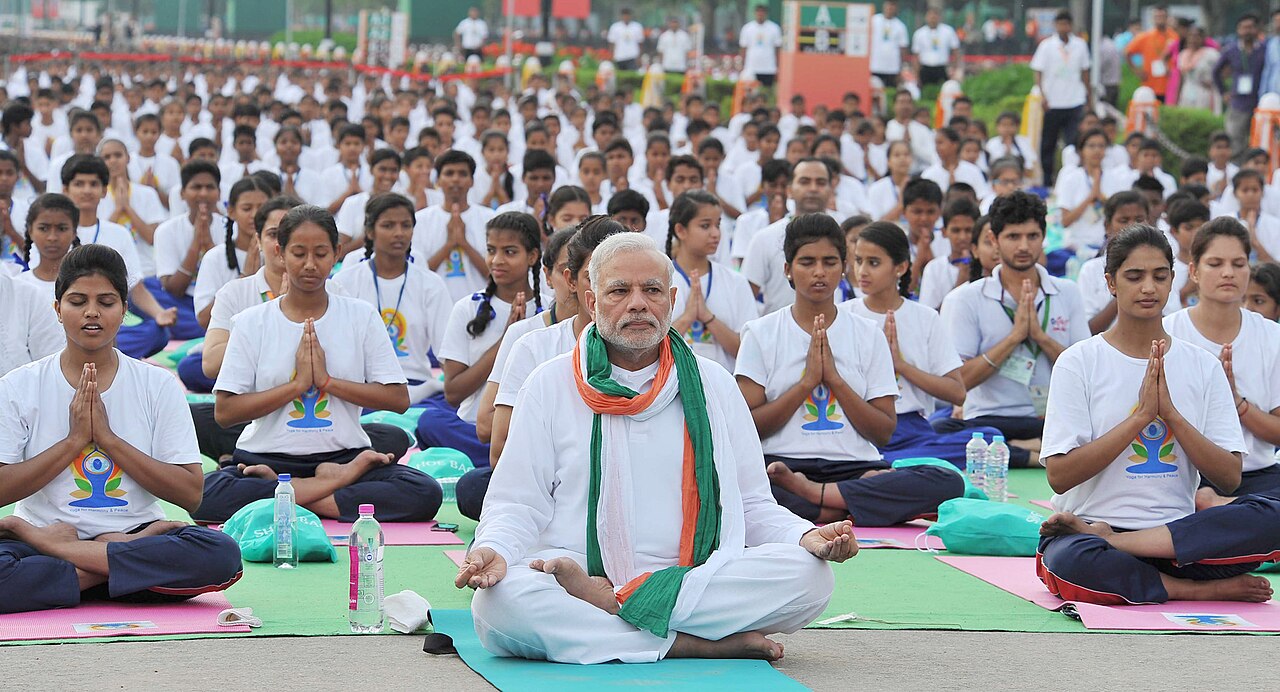
PM Narendra Modi Leads International Day of Yoga 2026 Celebrations from Kolkata New Delhi, June 21: Hon’ble Prime Minister Shri Narendra Modi led the nationwide celebrations of the 12th International Day of Yoga from Kolkata, with people across India participating under the theme ‘Yoga for Healthy Ageing’. In the national capital, Union Minister of Youth Affairs & Sports Dr. Mansukh Mandaviya, along with actor Akshay Kumar, led the celebrations at Jawaharlal Nehru Stadium where nearly 3,000 participants gathered for a mass yoga session organised by the Fit India Movement. Simultaneously, yoga sessions were conducted at Sports Authority of India (SAI) centres, National Centres of Excellence, SAI Training Centres and Khelo India institutions across the country, drawing participation from lakhs of citizens. Yoga and fitness must become part of everyday life if India is to realise its vision of becoming a developed nation, Dr. Mandaviya said, highlighting the role of the Fit India Movement in promoting preventive healthcare and behavioural change. During interactions, Dr. Mandaviya emphasised adopting practices such as yoga and cycling for daily health, while Akshay Kumar encouraged citizens to make fitness a regular habit for physical and mental well-being. Programme Highlights The programme featured cultural performances, live-streaming of the Prime Minister’s address and a Common Yoga Protocol session led by wellness expert Anshuka Parwani, who was felicitated as a Fit India Icon. Akshay Kumar was also honoured as a Fit India Icon for promoting fitness, while athletes excelling at the World Yogasana Sport Championship in Ahmedabad were recognised as Fit India Champions. The event was attended by senior officials including Secretary (Sports) Hari Ranjan Rao and Secretary (Youth Affairs) Pallavi Jain Govil. Post the formal session, participants engaged in yoga activities, counselling sessions and a Mallakhamb demonstration, reflecting India’s traditional fitness practices. The nationwide celebrations highlighted the growing synergy between initiatives like Fit India, MY Bharat and Yogasana Bharat in promoting healthier lifestyles.
After turning grief into joy Kajal Kumari Rai eyes Olympics glory after double gold at Khelo India Winter Games
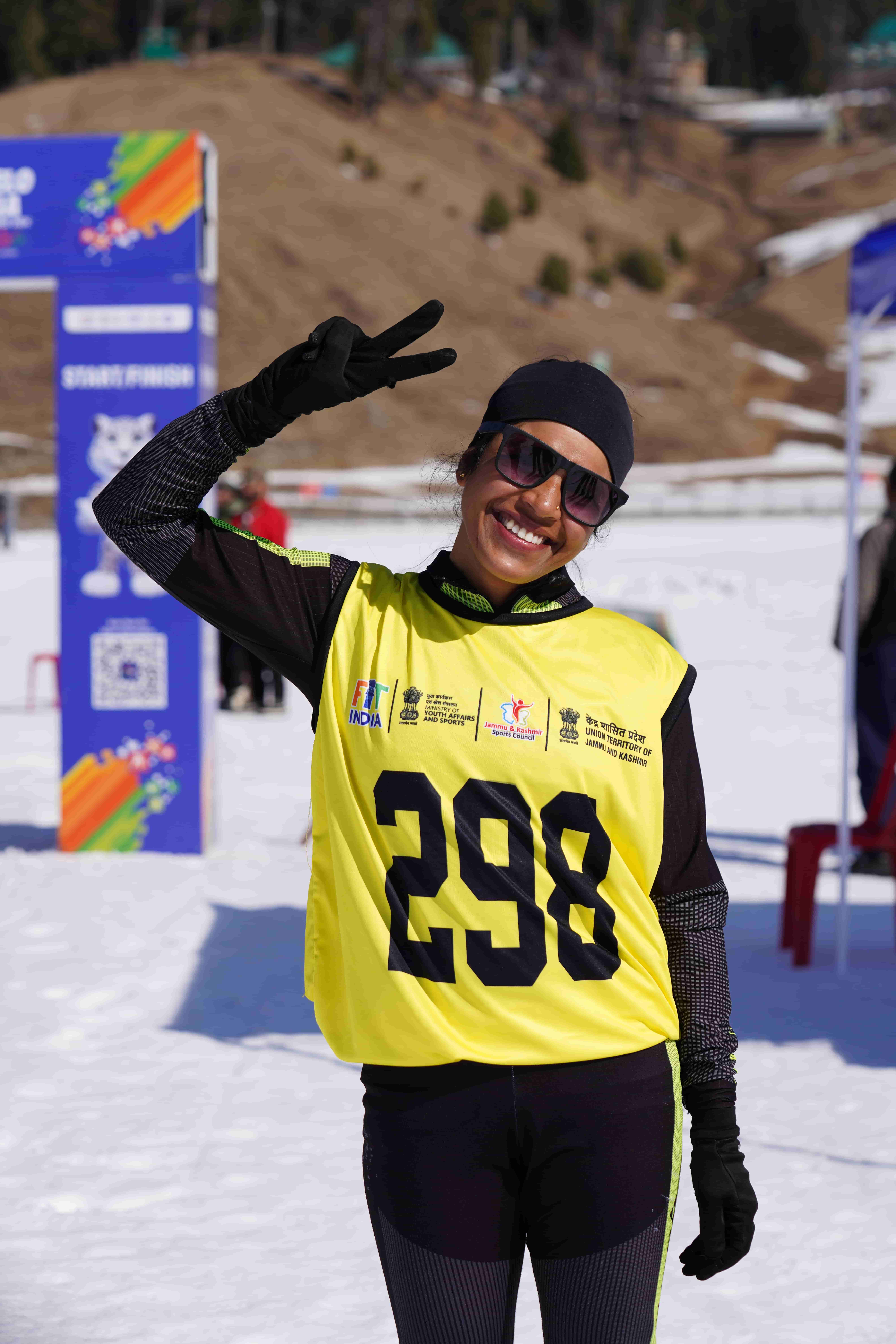
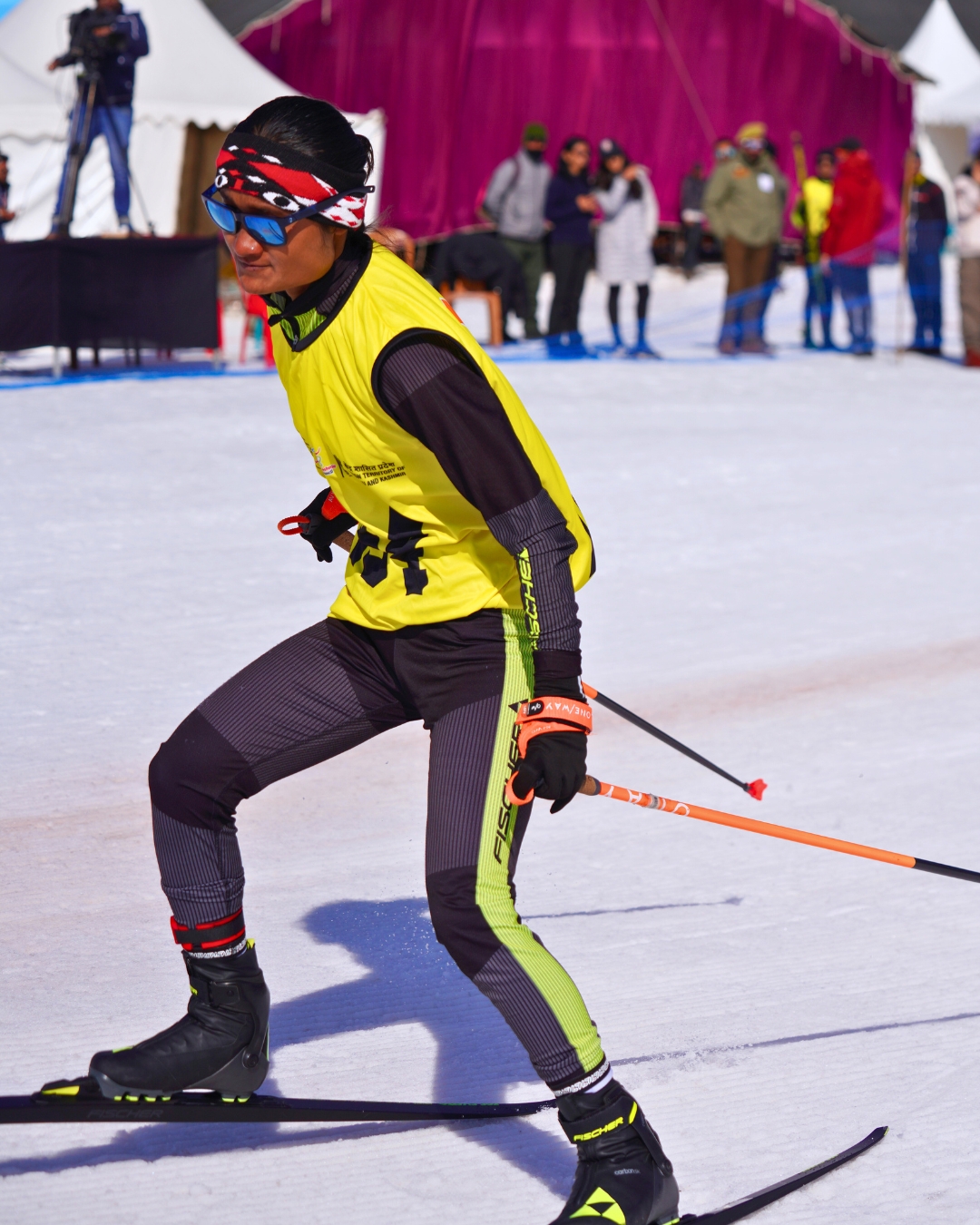
Gulmarg (Jammu & Kashmir), Feb. 24: The finish line arrived quietly, almost reverently, as if the snow itself understood what it meant. Kajal Kumari Rai did not raise her arms immediately. She slowed, her skis whispering over Gulmarg’s powder, her breath visible in the mountain air. For a moment, she simply stood there, eyes searching somewhere far beyond the white expanse, somewhere beyond the cheering officials, beyond the medals, beyond the moment. Somewhere, perhaps, where her father still lives. Then the realisation settled in. Another gold medal. Her second in as many days. And suddenly, the grief, the promise, the year-long burden Kajal had carried alone, all found its answer in gold. Just five days before the Khelo India Winter Games in 2025, Kajal’s world had collapsed. Her father died unexpectedly, forcing her to abandon training and return home to Shillong for his last rites. The rituals ended, but the grief did not. Still, Kajal returned to Gulmarg to compete, carrying shock and sorrow heavier than any snowfall. Nordic skier Kajal raced last year, but her body moved without her spirit. The mountains felt colder then. The snow, indifferent. But somewhere in that silence, the CRPF cross-country athlete made herself a promise. She would come back. And she would win, not for herself, but for her father. This February, on the Golf Course at Gulmarg, she kept that promise. On Monday, the 25-year-old from Meghalaya won gold in the Nordic Women’s 15 km sprint. On Tuesday, she returned and did it again, claiming gold in the 10 km sprint, completing a sweep that transformed grief into glory. Two races. Two gold medals. One daughter fulfilling a promise. Kajal’s journey to this moment makes the achievement even more improbable. Kajal comes from a land of rain and green hills, not snow and ice. Nordic skiing is not just uncommon there, it is almost unimaginable. “We don’t have this kind of weather,” she said. “Even surviving in snow is a big deal for us. Forget competing in a sport that tests your endurance like this.” She had only started skiing in 2024. No family history. No childhood winters on skis. No legacy to inherit. Just belief. For the past three weeks, Kajal trained relentlessly at the Indian Army’s High Altitude Warfare School (HAWS) in Gulmarg. There, she learned not just technique, but survival, how to move with the snow, how to endure it, and how to belong in it. “They trained us well,” she said. “They improved our technique and gave us confidence.” The mountains, once foreign, became familiar. She found herself mesmerised by Kashmir, its vast silence, its powdery snow, its beauty. “The natural views are amazing,” Kajal said. “The snow here is perfect for Nordic skiing.” But Kajal’s strength was forged long before Gulmarg. She serves in the CRPF, where endurance is not optional but an identity. It was there she discovered endurance sports. It was there she watched Army athletes compete at the Olympics and World Championships. It was there she allowed herself to dream. Her team manager, Magesh K, saw that transformation first-hand. “She has always worked extremely hard,” he said. “But more than that, she has the spirit of an athlete. That spirit is rare.” Mangesh saw it again at the finish line today. Another CRPF skier, Hiral from Gujarat, had just won bronze. Kajal, fresh off her own victory, walked to her and embraced her. They celebrated together, not as rivals, but as soldiers, as sisters. Victory had not hardened her. It had humanized her. Back home in Shillong, her mother, sister, brother, and sister-in-law were eagerly waiting for the results from afar and soon after the win she called them over video and broke the good news to them. No one in Kajal’s family had ever pursued sports professionally. No one had walked this path before her. She carved it herself. Kajal credits her friend and fellow CRPF soldier Lokesh Kumar for helping her believe she could. But belief alone was never enough. Consistency was. “I saw athletes from states without infrastructure succeed,” Kajal said. “I promised myself I would not complain. I would focus on my goal.” She did. And now, standing in Gulmarg with two gold medals, Kajal Kumari Rai is no longer just a participant. She is no longer just a skier from a state without snow. She is a champion. And somewhere, perhaps beyond the mountains, beyond the sky, beyond the finish line, a father’s promise has been kept. Her journey, Kajal says, is only beginning. She now dreams of the Olympics. Of World Championships. Of carrying her story, her father's story, onto the world stage. Because some victories are measured not in seconds, but in courage. And some gold medals weigh more than others.
How mason’s daughter Monikha Sonowal overcame pain barrier, self-doubts to clinch KITG weightlifting gold
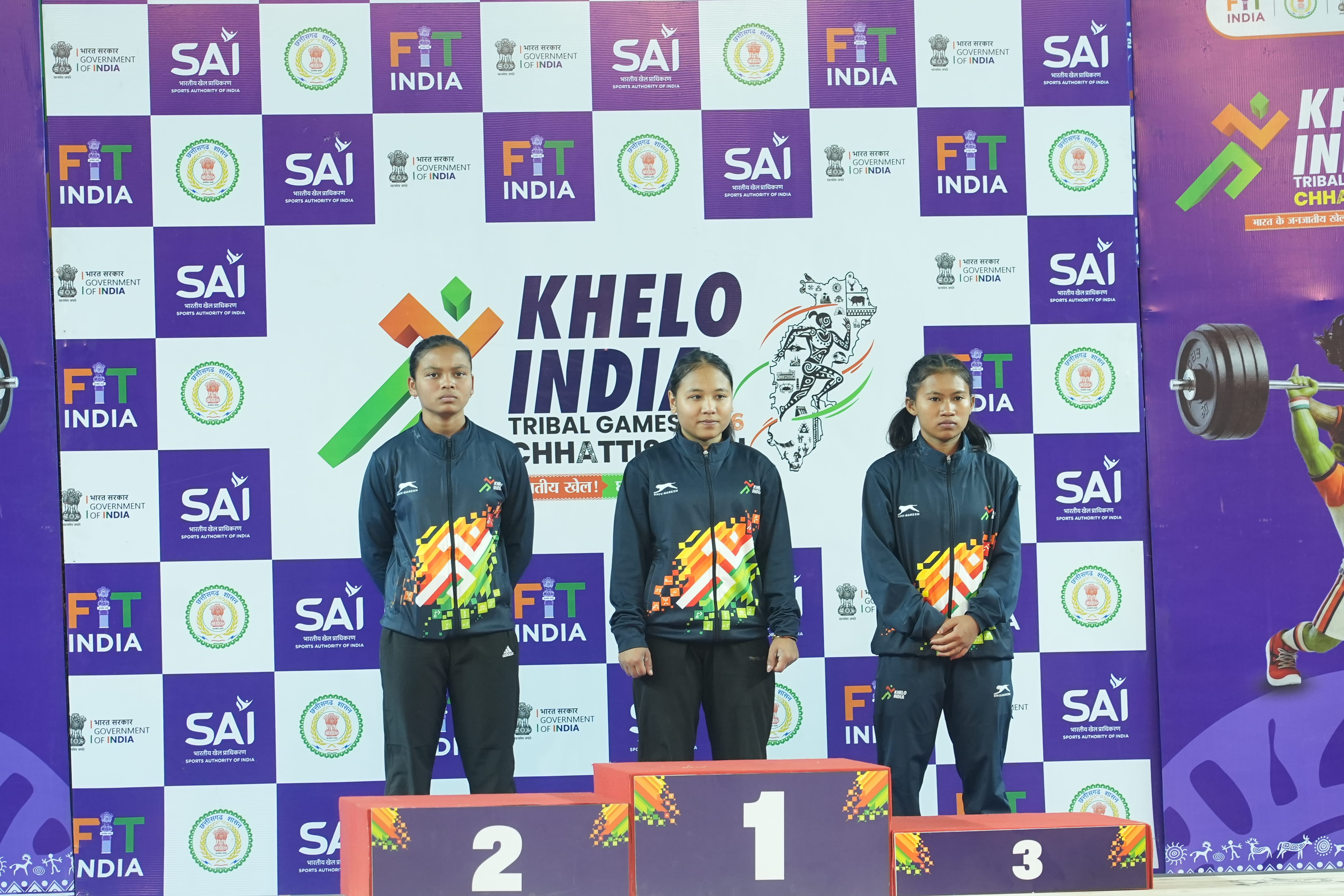
Raipur, March 27: “Perhaps he’s busy at the construction site,” Monikha Sonowal quipped as she tried calling her father again. Moments earlier, Monikha had clinched the gold medal in the women’s 48kg weightlifting category at the inaugural Khelo India Tribal Games 2026 here and wanted to convey the news to her father Padmadhar Sonowal, a mason who spends long days at construction sites to support his family of four and has been the 19-year-old’s biggest supporter in her sporting journey. Elder of the two siblings, Monikha hails from Batghoria Penbeni Chowk, a small and largely unnoticed locality in Assam’s Dhemaji district, located on the north bank of the Brahmaputra River and situated approximately 425 kms away from Guwahati. Life there moves at a quiet, unhurried pace and for most families in the village, dreams rarely stretch beyond family responsibilities and making ends meet. But for Monikha, the sound of barbells inside a weightlifting hall became the soundtrack of a dream that refused to stay small. Despite limited resources, her curiosity towards the sport gradually transformed into a passion, inspired by the global success of Tokyo Olympics silver medallist Mirabai Chanu from neighbouring Manipur. And on Thursday, that dream transformed into a moment of national glory as she battled a knee injury to clinch the first weightlifting gold medal of the Games, capping off the hard work she had been putting ever since she took up the sport a few years ago. A major turning point in her journey came two years ago when she joined Sports Authority of India’s National Centre of Excellence (NCOE) in Itanagar. “The NCOE Itanagar gave me everything an athlete from a small village like mine could only dream of. Proper training, nutrition and guidance, along with injury management. Without that support, reaching this level would have been very difficult,” said Monikha, who belongs to the Kachari Tribe. Her progress since then has been steady. Monikha won gold at the School Nationals in 2023, followed by a silver medal at the Khelo India ASMITA League in Sambalpur, Odisha, in 2024. In 2025, she secured a bronze medal at the State Championships in Tezpur and finished eighth at the Inter-University Championships in Chandigarh. But the road to her latest triumph was far from smooth. For the past three months, Monikha, a BA second-semester student at Dhemaji City College, had been struggling with a right knee injury sustained during training. Concerned about aggravating the problem, her coaches advised her to skip the Khelo India Tribal Games. But the 19-year-old weightlifter could not bring herself to stay away. Monika chose to compete and fight through the pain. “My coaches were worried about my knee and told me it might be better to rest,” she recalled. “But opportunities like the Khelo India Tribal Games don’t come often. I didn’t want to miss competing on such a big stage. “I want to keep improving and represent India one day. This gold is just the beginning,” Monikha added.
Khelo India Beach Games 2025 in Diu becomes an anti-doping awareness centre, hundreds of athletes set to benefit
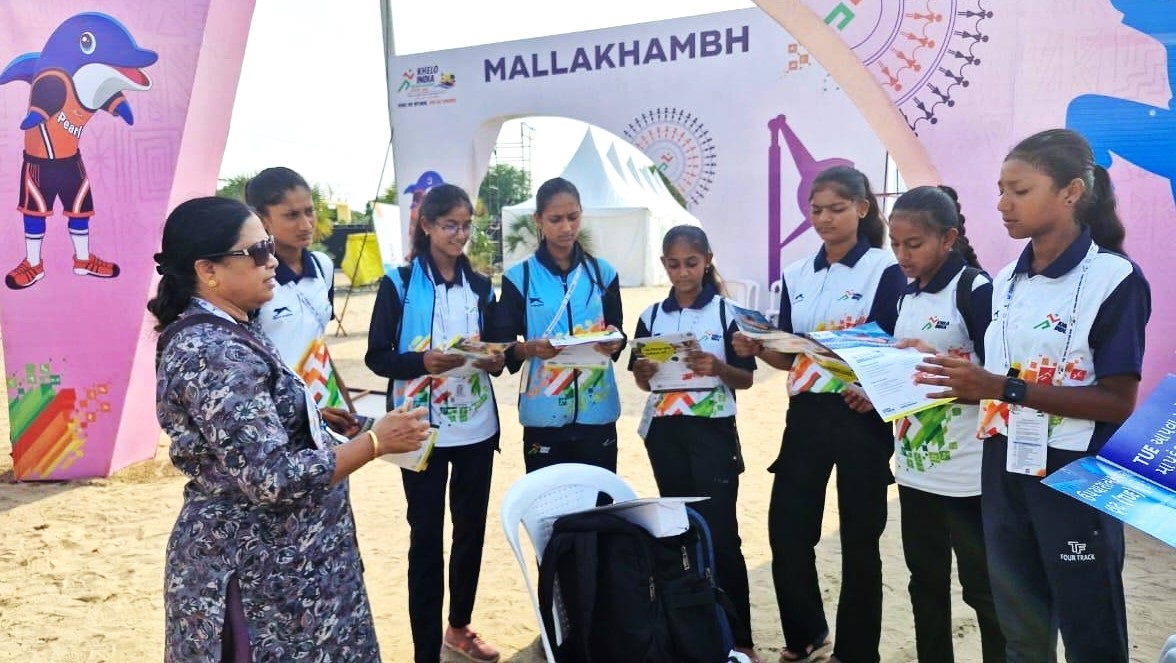
NADA Spreads Anti-Doping Awareness at Khelo India Beach Games 2025 Diu, May 22: The National Anti-Doping Agency (NADA) is strengthening its anti-doping awareness campaign at the 2025 Khelo India Beach Games (KIBG), being held in Diu from May 19. Leading the initiative at the scenic Ghoghla Beach venue is Dr Usha Subhash Nikumbh, Lead Dope Control Officer (LDCO) at NADA, supported by a team of volunteers. On Friday, the team visited every sporting venue across the beach, distributing colourful informational pamphlets in Hindi and English to educate athletes on the dos and don'ts of clean sport. We started this initiative in 2018. The idea was to make athletes aware of what all they needed to do to stay clean, Dr Nikumbh told SAI Media. We go from event to event, from national championships to academies and institutes. We were also at the recently concluded Khelo India Youth Games (KIYG) in Bihar. Since we started this programme, there is better awareness among athletes than before and fewer cases of anti-doping rule violations, she added. Four Key Messages for Clean Sport Dr Nikumbh and her team distributed four pamphlets titled All About Whereabouts, Be A Fair Play Ambassador, Keep the Best Food Forward, and It Is Your Call. All About Whereabouts explains the responsibilities of athletes in the Registered Testing Pool (RTP). It outlines the requirement to regularly submit accurate whereabouts information, including home address, email ID, phone number, overnight accommodation, daily schedule, training locations, competition schedules, and a designated 60-minute time slot each day during which they are available for testing. Be A Fair Play Ambassador provides role-specific guidance for athletes, coaches and parents. Athletes are encouraged to train and compete clean, avoid prohibited substances and methods, submit samples when required, and report Anti-Doping Rule Violations (ADRVs). Coaches are advised to educate athletes about prohibited substances and doping control procedures, avoid association with sanctioned individuals, and report ADRVs. Parents are encouraged to instil the values of clean sport, educate their children about ADRVs, discourage the use of prohibited substances, and speak up against violations. It Is Your Call highlights the importance of collective responsibility in eliminating doping from sport by encouraging everyone to report unethical practices and offenders. Keep the Best Food Forward advises athletes to avoid unnecessary supplements, as they may contain banned substances not listed on product labels and can have harmful side effects. Instead, NADA encourages athletes to rely on a balanced natural diet, adequate sleep and proper hydration to support performance. Khelo India Beach Games 2025 Nearly 1,000 athletes from 31 States and Union Territories are participating in the Khelo India Beach Games 2025 across six medal sports—pencak silat, beach soccer, beach volleyball, sepak takraw, open water swimming and beach kabaddi. Mallakhamb and tug of war are being featured as demonstration sports.
A unique mallakhamb academy in remote Bastar and its superstar coach and athlete
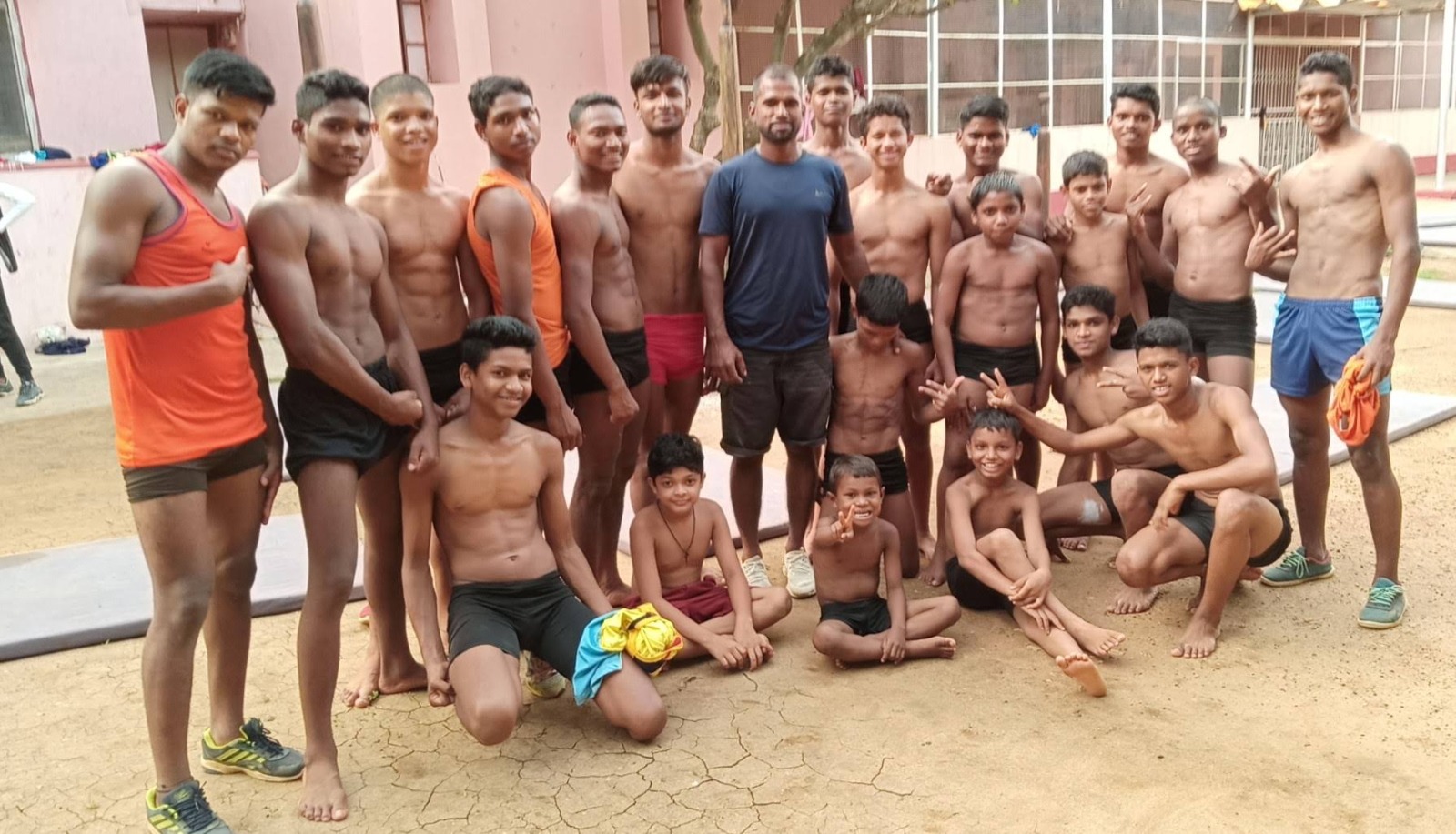
Diu, May 23: Mallakhamb is one of the oldest traditional sports in India and it is alive and kicking in the heart of Chhattisgarh’s Bastar district. If there is a classic case study to establish the transformative power of sports and its social impact, here’s the story of Manoj Prasad and his protégé Rakesh Kumar Varda. Manoj Prasad is a living example of how sports can bring about social change in troubled Naxal-infested regions of central India. Prasad, an STF (Special Task Force) officer, runs the Abujhmad Mallakhamb Academy in Narayanpur. Uniquely, chirldren from tribal communities are enrolled here and Prasad is like a father figure to them. He takes care of all expenses from accommodation to meals and equipment for training. Rakesh, one Prasad’s wards, excelled in mallakhamb, a non-medal sport at the first Khelo India Beach Games underway here. At KIBG, 10 trainees of Prasad’s Abujhmad Mallakhamb Academy, which was established in 2017, took part. For most of them from economically and socially marginalized backgrounds, Diu has been a window to the world. Fifteen-year-old Rakesh has been outstanding at KIBG. He had the credentials to do well and he did not fail. Rakesh won a gold medal at the Khelo India Beach Games. Since mallakhamb is a demonstration sport, this medal did not count in the overall tally but it was an endorsement of an athlete’s excellence in a particular sport. Rakesh hails from the tribal village of Kutul in the Abujhmad region of Narayanpur district. He is a member of the tribal community and is the only youngster from his area to play mallakhamb. Rakesh has won over 30 medals at national and state-level competitions. Recently, Rakesh won four medals (one silver and three bronze) at the Khelo India Youth Games held in Bihar. Rakesh began practicing Mallakhamb at the age of eight. Credit for introducing him to the sport solely goes to his coach, Manoj Prasad. Rakesh’s achievemnets speak volumes. In 2022, he set a Limca Book of Records entry for the longest handstand (1 minute and 6 seconds) on a Mallakhamb pole at the All India Handstand Championship. In 2023, he and his team from the Abujhmad Mallakhamb Academy won India’s Got Talent Season 10. Rakesh has also won a bronze at the Khelo India Youth Games in Panchkula, a bronze at the National Games in Gujarat, a gold, silver, and two bronze medals at the Khelo India Youth Games in Ujjain and a bronze at the National Games in Goa. Rakesh has faced personal tragedy too. Just two days after returning from the Gujarat National Games, his mother passed away. However, due to lack of communication in his remote village , he received the news only after two days. Speaking to SAI Media, Rakesh said, “My goal is to work towards the development of my region and to pass on the culture of my ancestors to future generations.” But all credit to Manoj Prasad for remaining a strong force in a sport that does not make mainstream news. “Fulfilling the daily needs of 25 children is not an easy task but seeing the results, senior police and administrative officials living in my area have started helping wholeheartedly for some time now. Along with this, many local people have also come forward to help them. In this, the secretary of Chhattisgarh Malkhamb Sangh, Rajkumar Sharma, has a special contribution and is always willing to help us,” Prasad told SAI Media. “I bring tribal children between 5-15 years from different areas and take care of their education and sports needs at the academy. These children come from completely illiterate families with no source of income. I want to help them enter the mainstream on the basis of their abilities so they can secure jobs and lead better lives. I’m all they have,” Prasad, a former national level sprinter, said on an emotional note. Prasad concluded by saying, “The Khelo India Beach Games is a great initiative. I was happy to see Mallakhamb included in it. Now that the Government of India has announced the organization of Tribal Games, we are very excited. Bringing tribal communities into the mainstream is essential if India is to become a global power—and I believe it can be done through the transformative power of sports.”
Renu Danu’s Silver Story: She saw snow for the first time at 24, at 26 she owned Khelo India Winter Games 2026
Gulmarg (Jammu & Kashmir), Feb. 26: The first time Renu Danu saw snow, she didn’t touch it. She studied it as she stood on the slopes of Gulmarg, the silence broken only by the crunch of skis slicing across frozen earth. The snow was not soft like in films. It did not care that she was 26, that she was a constable in the Central Reserve Police Force (CRPF), that she had grown up in Haldwani, Uttarakhand, where winters were cold but never white. Two years later, Renu stood on the podium with three silver medals around her neck at the Khelo India Winter Games 2026. Her's is not just a story about winning. It is a story about arrival. Back home, her father drives trucks for a living. Renu’s mother keeps the house steady. One brother serves in the Air Force. Another runs a business. They understand sacrifice. They understand discipline. But they did not understand skiing. “They know cricket, football, volleyball,” Renu says with a smile. “They don’t understand what Nordic skiing is. They don't understand what Ski Mountaineering is. They only see videos of me.” In Haldwani, there were no ski tracks, no winter sport academies, no dreams shaped like mountains. There were only dusty grounds, where she ran races and played kabaddi, unknowingly building the endurance that would one day carry her across frozen valleys. Sports was always there but opportunity was not. For her studies came first, life came first, and sport had to wait. In 2021, Renu joined the CRPF as a Constable General Duty. It was supposed to be a job, stability, and security. It became something else. In 2024, Renu was posted to Srinagar. Kashmir introduced her to a new geography. And then, Gulmarg introduced her to herself. She trained for just one month before competing at the Khelo India Winter Games 2024. She did not win. She did not even come close. But she finished. For most athletes, finishing is routine. For Renu, finishing was defiance. “I was new,” she says. “I didn’t know the techniques but I completed the races.” Completion became belief and belief became momentum. In 2025, Renu returned stronger and finished fourth in a Nordic event. However, she won silver in Ski Mountaineering relay. The same year, she won gold at the National Winter Biathlon Championship in Gulmarg, racing through exhaustion, balancing speed with precision shooting. Each year, she moved forward, each year, the mountain gave her more. This year, it gave her three silvers in women’s Nordic 15-km, women’s Nordic 1.5-km Sprint, and women’s Ski Mountaineering Relay. Three medals, three affirmations. This is proof that she belonged. The Army’s High Altitude Warfare School became her classroom. Olympian coach Nadeem Iqbal taught her technique and CRPF coach K Shukla and team manager Magesh K gave her something equally valuable - belief. “When she came, she knew nothing about winter sports,” Shukla says. “But she worked harder than anyone. Her future is bright. I see her at the World Championships, even the Olympics.” Discipline Renu already had, endurance she had built unknowingly, in childhood games. What she needed was exposure and now she has it. But she also sees what’s missing. “We only get to train two months a year,” Renu says. “Imagine if we could train all year. Imagine how good we could be.” Her voice carries neither complaint nor frustration, only vision. "Artificial snow tracks, better gyms, year-round training facilities," Renu wants not just for her, for everyone who comes after. Her ambitions now stretch beyond Gulmarg, beyond India. She wants to compete in FIS races, World Championships, and the Olympics. The journey from Haldwani to Gulmarg once seemed unimaginable. Now, Gulmarg is just the beginning. What makes her story powerful is not how fast she became good, it is how late she began. In just two years, she went from never seeing snow to standing on the podium. “Some girls think winter sports needs too much endurance,” she says. “But if I can do this, anyone can.” This is not motivational rhetoric; it is lived truth. Silver medals are often described as near misses. But on this mountain, silver means something else, it means transformation, it means that somewhere in Haldwani, a transporter’s daughter outran her past, it means that snow, once foreign, now feels like home, it means that India’s winter sports story is still being written, and athletes like Renu Danu are holding the pen. And perhaps, somewhere in the near future, when she stands on a different mountain, under the Indian flag, those silver medals will no longer represent arrival, they will represent the beginning.
From delivering milk to winning first career gold at KITG 2026, J&K wrestler Hamam Hussain’s dreams come true
Ambikapur, April 1: When Jammu and Kashmir’s Hamam Hussain’s isn’t busy with wrestling practice he helps his elder brother delivering milk door-to-door. Hussain and his elder brother have been selling milk to earn a living for their family ever since their father passed away five years ago while also keeping his wrestling dream alive. All those efforts finally came to fruition at the Khelo India Tribal Games 2026 here when the 28-year-old wrestler from Jorawar village in Jammu clinched the men’s 79kg freestyle gold beating Mohit Kumar of Himachal Pradesh to clinch his first gold medal at a national level in his 14 year wrestling career. “My elder brother was also a wrestler and had competed at the state level. After our father passed away, all responsibilities came on our shoulders. My brother had to quit wrestling and started selling milk. I would go with him to deliver milk as it was necessary for us to run the family. But he motivated me to continue wrestling and took me to dangals,” Hussain told SAI Media. “The buffaloes our father left behind became our source of livelihood. My brother ran the household by selling milk, and I helped him. But once I stepped into the mud akhada, I was fascinated with the sport,” said the father of one, who belongs to the Hussain tribe in Jammu. Despite limited facilities, Hamam never lost hope. He trains nearly 20 km away from his village in a mud akhada and travels around 40 km to Jammu for mat practice—all while continuing his work responsibilities. “The SAI centre is in Jammu and we live in a lower region, so it is quite far for us. It is difficult to go there regularly for practice. We usually go only when there are competitions there; otherwise, we train in mud akhadas. “I don’t have a personal coach. Senior wrestlers in the akhada guide us. When we train on mats, there are coaches there. In villages, we don’t get the kind of facilities that wrestlers in cities have. If we get better facilities, wrestlers from our region can win more medals at national and international levels,” he said. Hamam considers this gold more than just a medal—it symbolizes years of struggle and commitment. “It feels great to be here. The facilities provided were very good. We come from a backward area where there is not much support for wrestling, so we have to travel long distances to train. This is the first time such a competition has been organised for us, and if more such events are held, we can win more medals,” he signed off.
Of sacrifices and dreams: Leaving her four-year-old daughter behind, Pallavi Payeng finishes on Khelo India Tribal Games podium
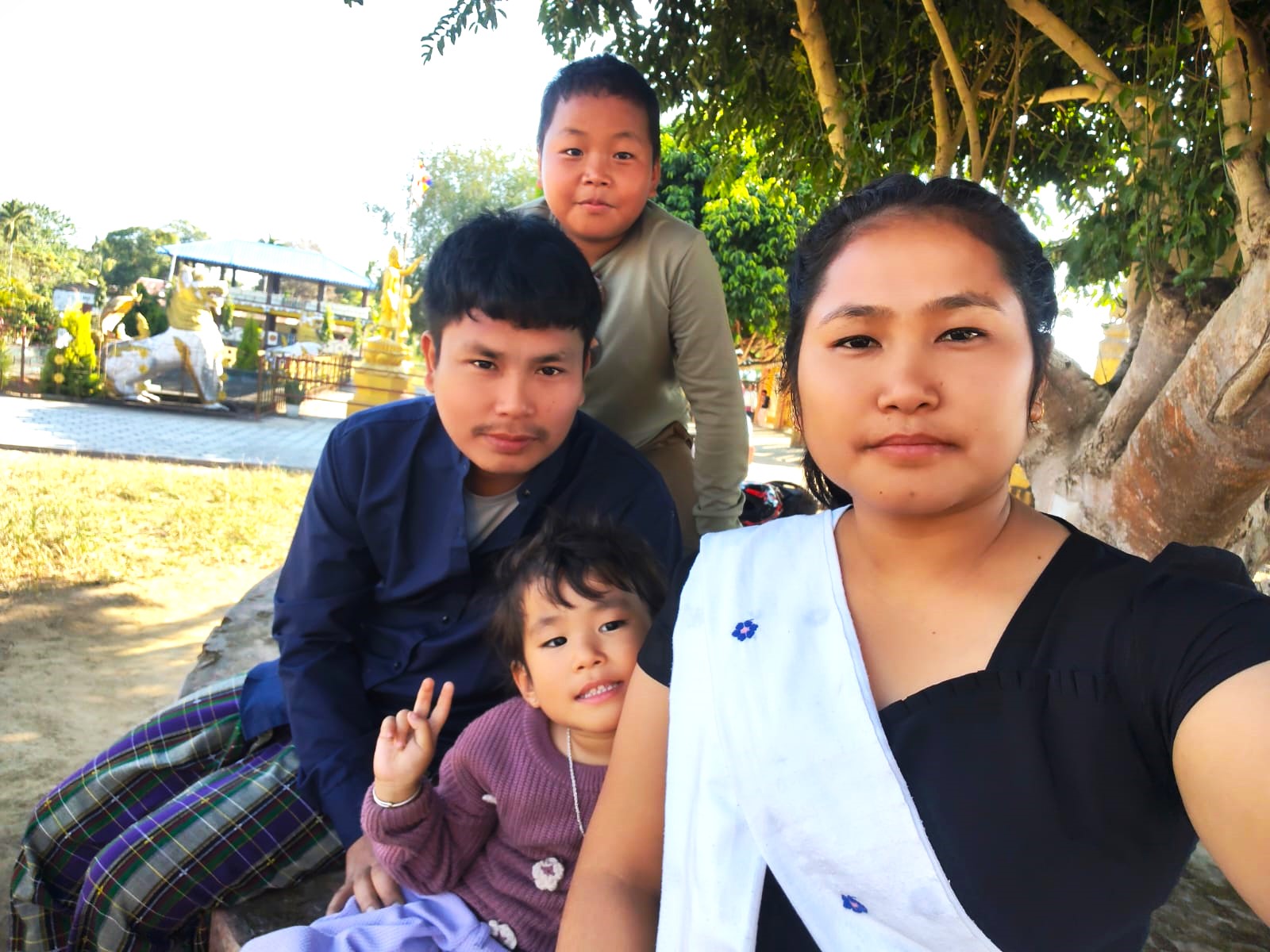
Raipur, March 30: When Pallavi Payeng’s daughter was just six months old, the weightlifter had to make a difficult choice to either leave the sport she loved so much or sacrifice her time with her daughter and go back to training. Her husband Sukhawon Thouwmung then egged to pursue her dream while her mother offered to take care of the infant. Pallavi made all those sacrifice count as she bagged the silver medal in the women’s 69kg category at the inaugural Khelo India Tribal Games here. Belonging to the Mising Tribe in Assam, Pallavi had begun her weightlifting journey in 2018 and steadily built a reputation by winning medals at the state championships. But the Covid-19 lockdown disrupted her progress. During that phase, life moved in a different direction as she embraced motherhood but the desire to return to the weightlifting platform was still burning bright. But the thought of returning to the sport after childbirth was both exciting and daunting. “It’s not easy. Though there have been numerous examples of women shining in the international stage after becoming mothers, only a woman can understand what she needs to go through to return to full fitness,” said Pallavi to SAI Media. “I left my baby when she was just six months old to return to training. It was an emotional decision, but I felt it was the right time to restart,” said Pallavi, whose daughter, now four, divides her time between Pallavi’s rented accommodation at Sarupathar and her grandmother’s home in Borpathar, around 20 kilometres away in Golaghat district. That decision meant long hours away from her child and countless moments when Pallavi questioned whether she had made the right choice. But the support of her family ensured she never felt alone in the journey. “My husband has been very supportive throughout, while my mother ensures the little one is taken proper care whenever I travel for competitions,” she said. Pallavi’s husband, a former national-level boxing medallist, works as a driver with the Border Security Force (BSF) and is currently posted in Jammu. But despite all this support the comeback was anything but smooth. Pallavi’s first attempt after childbirth came in the 2023 state championships in Golaghat, where she finished sixth. The following year in Dibrugarh brought frustration as the competition stretched late into the night and she struggled to find her rhythm. But she persisted. In 2025, she finally began to see the rewards of her determination. At the state championships in Tezpur, she claimed a silver medal and then went on to win the gold in the ASMITA league the same year. Another gold at this year’s ASMITA league confirmed that she was steadily returning to her best. The silver medal at the Khelo India Tribal Games in Raipur, however, felt different. “The Khelo India Tribal Games silver is a breakthrough moment for my career, as this gives me the confidence that I belong to this level,” she signed off.